
Did you know there are several different ways to say “open” and “close” in Japanese? Words like hiraku, akeru, and aku all translate as “open,” while tojiru, shimeru, and shimaru can all mean “close.”
The tricky part is knowing which one sounds natural in each situation. Let’s look at the differences with simple examples.
Here’s a quick summary if you just want the short answer.
Open verbs
| If you want to… | Use |
|---|---|
| Open or unfold a book, umbrella, flower, meeting, etc. | 開く (hiraku) |
| Open a door, window, lid, or curtain yourself | 開ける (akeru) |
| Say something opens by itself | 開く (aku) |
Close verbs
| If you want to… | Use |
|---|---|
| Close a door, window, curtain, or bag yourself | 閉める (shimeru) |
| Say something closes by itself | 閉まる (shimaru) |
| Close or fold a book, umbrella, eyes, etc. | 閉じる (tojiru) |
Open verbs: Hiraku vs Akeru vs Aku
開く (hiraku)
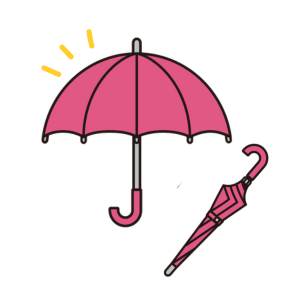
“Hiraku” conveys the image of something spreading out or unfolding in a broader. It is the opposite of “tojiru” (to close) and usually refers to an opening that can be reversed to its original state.
Examples:
- 本を開いてください。- Please open the book.
- ドアを開いて待っていてください。- Open the door and wait.
- 今朝、花が開きました。- This morning, the flowers bloomed.
開ける (akeru)
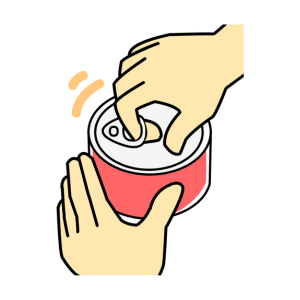
“Akeru” refers to removing something that covers or blocks. It can be used even if the object cannot return to its original state (e.g., a lid of a can). We also use this verb to open objects by sliding.
Examples:
- 瓶の蓋を開けてくれますか?- Can you please open the bottle?
- 暑いので窓を開けてください。- Please open the window, it’s hot.
- 朝起きたらカーテンを開けます。- I open the curtains when I wake up.
開く (aku)

This verb “aku” refers to something opening on its own, or becoming open due to some external force (e.g., a person or machine). It implies a state where one can freely enter or exit.
Examples:
- 8時に店が開きます。- The store opens at 8:00.
- 風でドアが開きました。- The door opened because of the wind.
- ボタンを押せば鍵が開きます。- The lock will open if you press the button.
Open Verbs Quick Review
| Verb | Type | Target | Meaning |
|---|---|---|---|
| hiraku | Both | Books, umbrellas, etc. | Opening something that is closed or folded. |
| akeru | Transitive | Lids, locks, curtains, etc. | Opening something that is sealed, covered or locked. Sliding to open. |
| aku | Intransitive | Stores, doors, etc. | Opening automatically or in response to some action. |
Notes
- Depending on the context, different verbs may be applied. For example, you use “akeru” to open a door by yourself but “aku” or “hiraku” if it’s an automatic door.
- In some cases, two or more verbs may have nearly the same meaning. For example, “目をひらく” and “目をあける” both mean ‘to open one’s eyes.
- There are also abstract uses that don’t fit into the examples above, such as “会議をひらく” (hold a meeting) or “心をひらく” (open one’s heart).
Close verbs: Tojiru vs Shimeru vs Shimaru
閉じる (Tojiru)
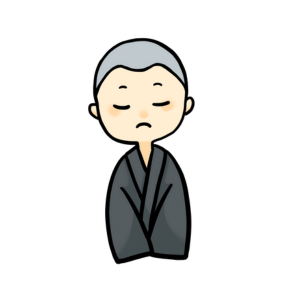
“Tojiru” refers to closing something open or expanded.It is the opposite of “hiraku” (to open), and normally indicates something that can be reopened later.
Examples:
- 本を閉じてください。- Please close the book.
- 雨が止んだので傘を閉じました。- I closed the umbrella when the rain stopped.
- 目を閉じたら寝られますよ。- You can sleep if you close your eyes.
閉める (Shimeru)
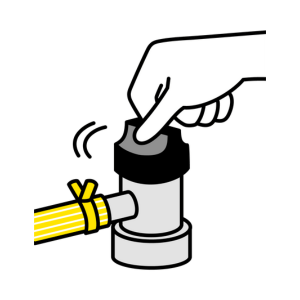
“Shimeru” refers to intentionally closing something that was open or blocking an entrance or space. It can also mean sliding something shut, like curtains.
Examples:
- 家を出るときは鍵を閉めてください。- Please lock the door when you leave.
- 寝る前にカーテンを閉めました。- I closed the curtains before going to bed.
- ゴミ袋は閉めてから外に出しましょう。 Don’t forget to close the rubbish bag before taking it out.
閉まる (Shimaru)
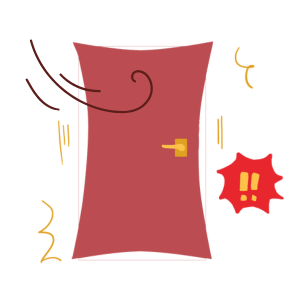
“Shimaru” describes something closing automatically or being closed by external forces, such as a person or a machine, resulting in it being blocked or unable to pass through.
Examples:
- 自動ドアが閉まるので、気を付けてください。- Be careful, the automatic door will close.
- 強い風で窓が閉まりました。- The window closed because of the strong wind.
- お店は10時に閉まります。- The store closes at 10:00.
Close Verbs Quick Review
| Verb | Type | Target | Meaning |
|---|---|---|---|
| Tojiru | Both | Books, eyes, umbrellas, etc. | Closing or folding something that is open. |
| Shimeru | Transitive | Bags, locks, windows, etc. | Closing something that is unlocked, uncovered or blocking a space. Sliding to close. |
| Shimaru | Intransitive | Doors, windows, lids, etc. | Automatically closing or being closed by some action. |
Notes
- Depending on the context, different verbs may be applied. For instance, you must use “shimeru” if you close the door by hand, but you say “shimaru” if it’s an automatic door. Some might also use “tojiru” if it’s a hinged door.
- Like with “open,” there are abstract uses that don’t fit the typical examples, such as “話を閉じる” (end a conversation) or “心を閉じる” (close one’s heart).
As you can see, the verbs “hiraku,” “akeru,” “aku,” and “tojiru,” “shimeru,” and “shimaru” differ in grammatical classification and the kind of actions they describe. Understanding these differences will help you use Japanese more naturally and effectively!