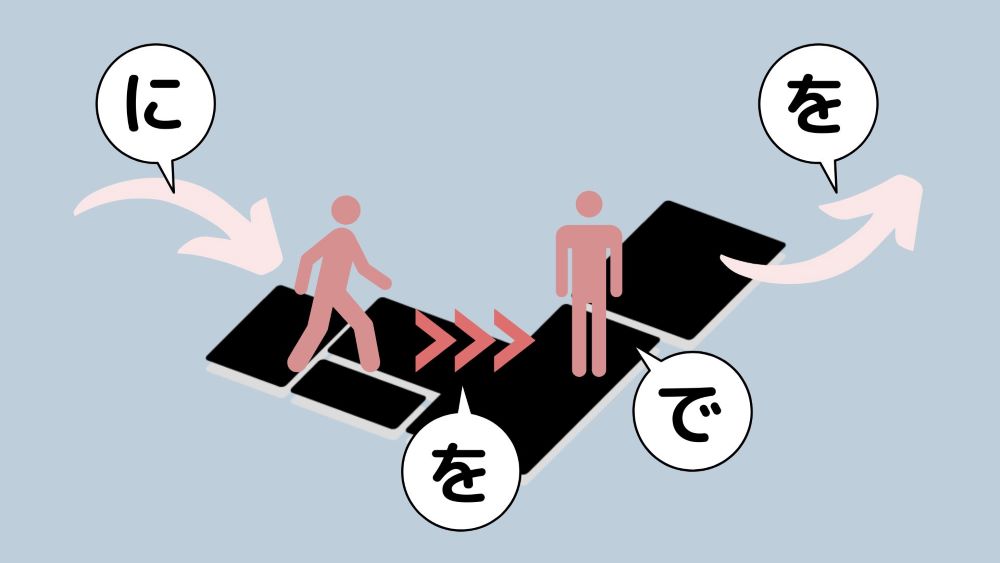
When learning Japanese, you’ll frequently come across the particles “に,” “で,” and “を.” All of them can indicate direction and location, but their usage is a bit different from English prepositions. In this article, we’ll explain the differences between “に,” “で,” and “を” when used to indicate place and direction, with explanations and simple examples.
“に,” “で,” and “を” for Place and Direction
Particles play a important role in Japanese, linking words and showing the relationship between verbs, nouns, and other parts of a sentence. The particles “に,” “で,” and “を” are often used to express place and direction. They roughly correspond to English prepositions like “to,” “at,” and “in,” but their usage doesn’t always align directly with a single preposition. You need to understand which particle to use based on the context.
These particles also serve other purposes, such as indicating a target, method, or reason. However, to avoid confusion, let’s first focus on how “に,” “で,” and “を” are used to indicate place and direction.
Particle “に”
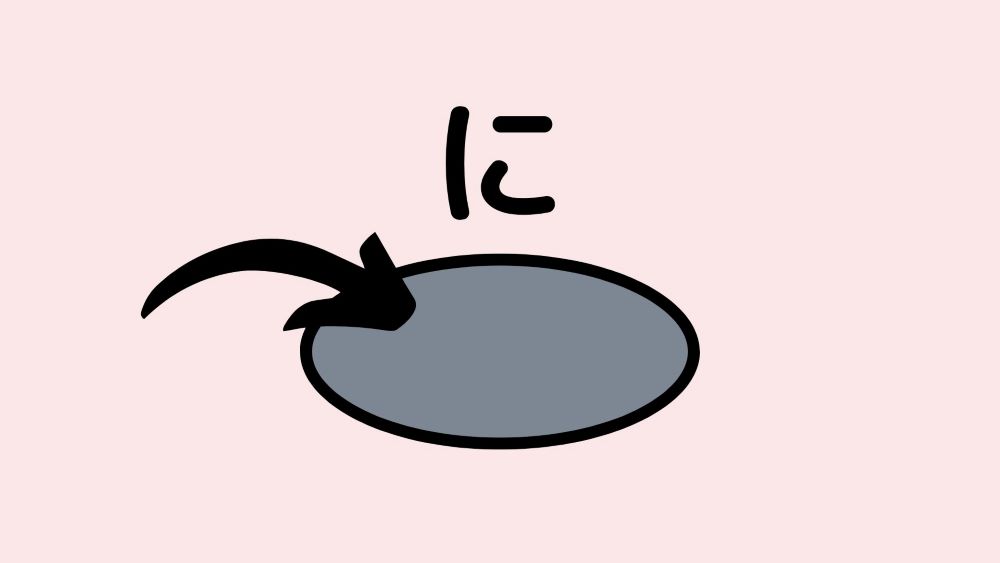
“に” is a particle that marks the destination or direction. It’s similar to “to” or “at” in English, and it often gives the sense of going towards or arriving at a location.
Indicating Destination or Direction
Example: 東京に行きます。 (I’m going to Tokyo.)
Example: 部屋に入ります。 (I’m entering the room.)
Particle “で”
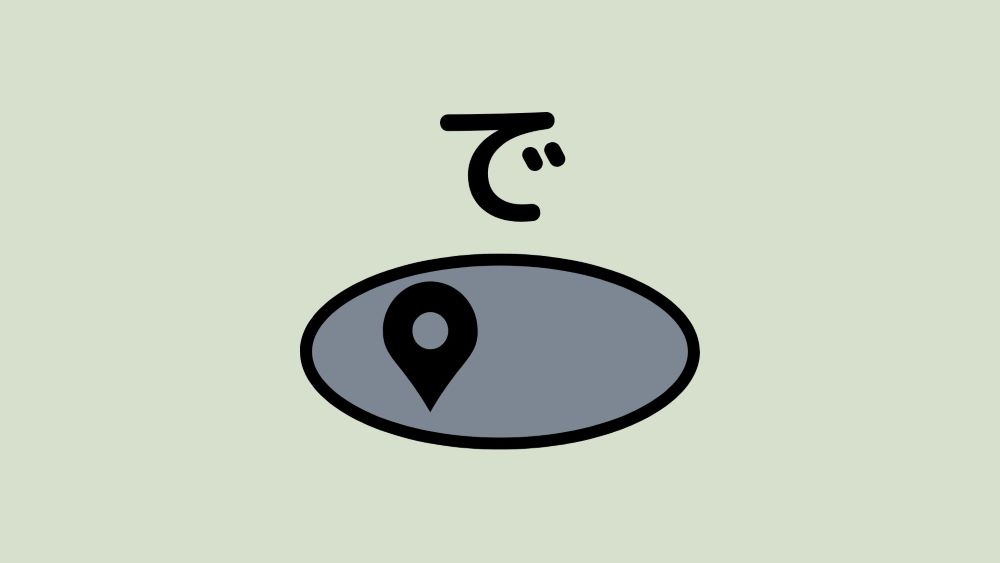
“で” marks the location where an action happens. It’s similar to “at” or “in” in English but gives the sense of a place where some kind of activity occurs.
Indicating Place of Action
Example: 公園で遊びます。 (I play in the park.)
Example: 図書館で勉強します。 (I study at the library.)
Particle “を”
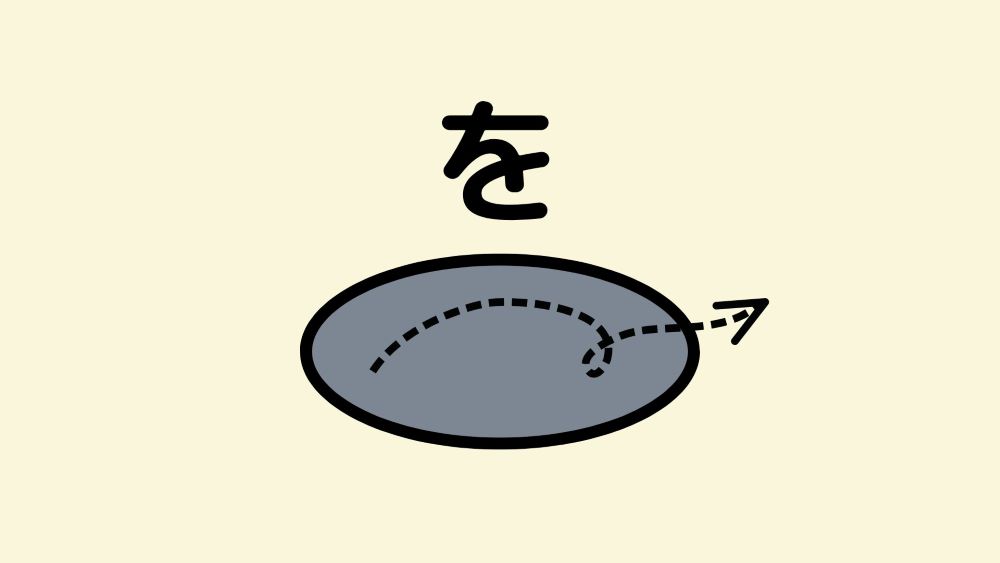
“を” indicates passing through a place or moving away from a location. It’s like “through” or “along” in English and can also imply leaving a place.
Indicating Path or Route
Example: 道を歩きます。 (I walk along the road.)
Example: 日本を旅行します。 (I travel around Japan.)
Indicating Leaving a Place
Example: 家を出ます。 (I go out of the house.)
Other Uses of “に,” “で,” and “を”
Particle “に”
“に” can also indicate time or recipient besides location or direction.
Indicating Time
Example: 6時に起きます。 (I wake up at 6 o’clock.)
Example: 月曜日に会いましょう。 (Let’s meet on Monday.)
Indicating Target or Recipient
Example: 友だちに電話をかけます。 (I call my friend.)
Example: 猫にエサをあげます。 (I give food to the cat.)
Particle “で”
“で” can also be used to indicate means or method, and reason.
Indicating Means or Method
Example: 電車で行きます。 (I go by train.)
Example: はしでご飯を食べます。 (I eat with chopsticks.)
Indicating Reason
Example: 病気で学校を休みました。 (I was absent from school because of illness.)
Particle “を”
“を” also indicates the direct object of an action.
Indicating Direct Object
Example: コーヒーを飲みます。 (I drink coffee.)
Example: 本を読みます。 (I read a book.)
Summary
The Japanese particles “に,” “で,” and “を” each serve different roles when referring to location or direction.
By keeping these distinctions in mind, you’ll be able to create clearer and more natural-sounding Japanese sentences. We hope this guide helps you get a better grasp of these essential particles!